MDF


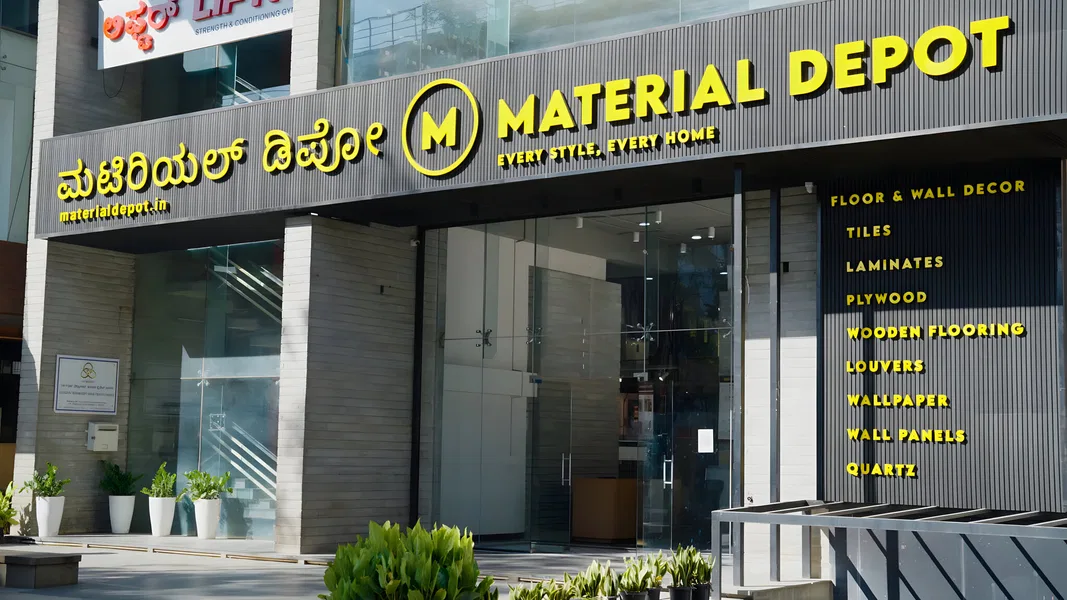
J.P. Nagar Experience Centre
Choose your nearest Experience Centre.
10000+
Happy Homes
Designer
Consultation
Live
Visualization
MDF is a type of engineered wood made by reducing hardwood or softwood residuals into wood fibers, then combining them with wax and resin under high pressure and temperature. This makes the mdf board exceptionally smooth, dense, and uniform in appearance, finding wide application in furniture, cabinetry, and interior applications. It is more affordable than plywood for indoor projects and more versatile when projects don't need high structural strength.
MDF vs. Plywood: Key Differences
MDF boards and plywood are both widely used in furniture and construction. However, the significant differences between these two lie in their composition, durability, and applications:
-
Composition: MDF consists of fine fibers of wood, mixed with resin to make it dense and smooth, thus easier to cut and shape. In contrast, plywood is a veneer-thin layer of wood glued in a crisscross pattern to form a strong, layered structure.
-
Strength/Durability: Since the weight-to-strength ratio is higher in plywood, it applies better to structural uses.
-
Workability: MDF boards have the advantage of being easy to cut, sand, and shape-that is why they're so apt for complex designs. On the other hand, plywood is firm enough that it may splinter and is not as easy to get smooth cuts on, but it is much better with screws and nails because of its structure in layers.
-
Cost: Normally, MDF is less expensive than plywood. This makes it a common choice for furniture and cabinetry on a tight budget. It is very good and works well as an alternative to plywood for applications that are non-structural and indoors.
MDF Board Grades
MDF boards for the building and construction industries are made available in different grades for specific uses, namely Interior and Exterior grades:
-
Interior Grade MDF: These are primarily utilized indoors where there is less concern regarding the exposure to moisture. It is used in furniture, cabinetry, wall panelling, and shelving. This interior-grade MDF comes with a very smooth and paintable surface, ideal for decorative work.
-
Exterior Grade MDF: Exterior grade MDF is treated to withstand moderate exposure to moisture and is good to use in semi-outdoor areas such as covered patios or garages. This grade, without a doubt, resists warping and swelling better than interior-grade but is still not as durable as waterproof plywood in fully outdoor conditions.
For instance, if you’re constructing a custom bookshelf for your living room, interior-grade MDF is a great choice due to its smooth finish and suitability for painting. For balcony furniture that may encounter occasional moisture, exterior-grade MDF offers better durability.
MDF Board Sizes
MDF boards come in several standard sizes to accommodate different project needs. Here are some common MDF boards dimensions:
-
8x4 (8 feet by 4 feet): The most commonly used for large furniture, cabinetry, and wall panelling projects. This size is ideal for projects that need extensive, smooth areas with minimal seams.
-
8x6 (8 feet by 6 feet): A bigger format, allowing more surface area to make oversized shelving units, wardrobes, or specialty furniture items. This will minimise the number of joints in a particular workpiece.
Uses of MDF Boards
MDF boards are highly versatile and find application in the following:
-
Furniture: MDF is generally used for cabinets, wardrobes, and shelving units because it has a smooth surface, which is suitable for painting or lamination.
-
Cabinetry and Shelving: The uniform surface of MDF boards is absolutely ideal for cabinets in kitchens and bathrooms and also living areas.
-
Wall Panelling and Decorative Panels: MDF is often used for wall panels, mouldings, and decorative trims. Its smooth surface takes paint well, allowing for custom finishes.
-
Interior Doors: Cost-effective MDF takes paint really well, therefore it finds its application in interior door construction, particularly in modern cases where a smooth finish is needed.
-
DIY Projects and Crafts: MDF’s easy workability makes it ideal for DIY projects like custom desks, storage solutions, and decorative pieces.
MDF boards provide an affordable, adaptable alternative to plywood, especially for indoor applications where moisture exposure is limited. With options in interior and exterior grades and various sizes, MDF can be tailored to a wide range of projects, from cabinet to wall panelling and DIY furniture.

Video Call